Animal bone, pig femur (Archaeological Find)
Files

Title:
Animal bone, pig femur
Subject:
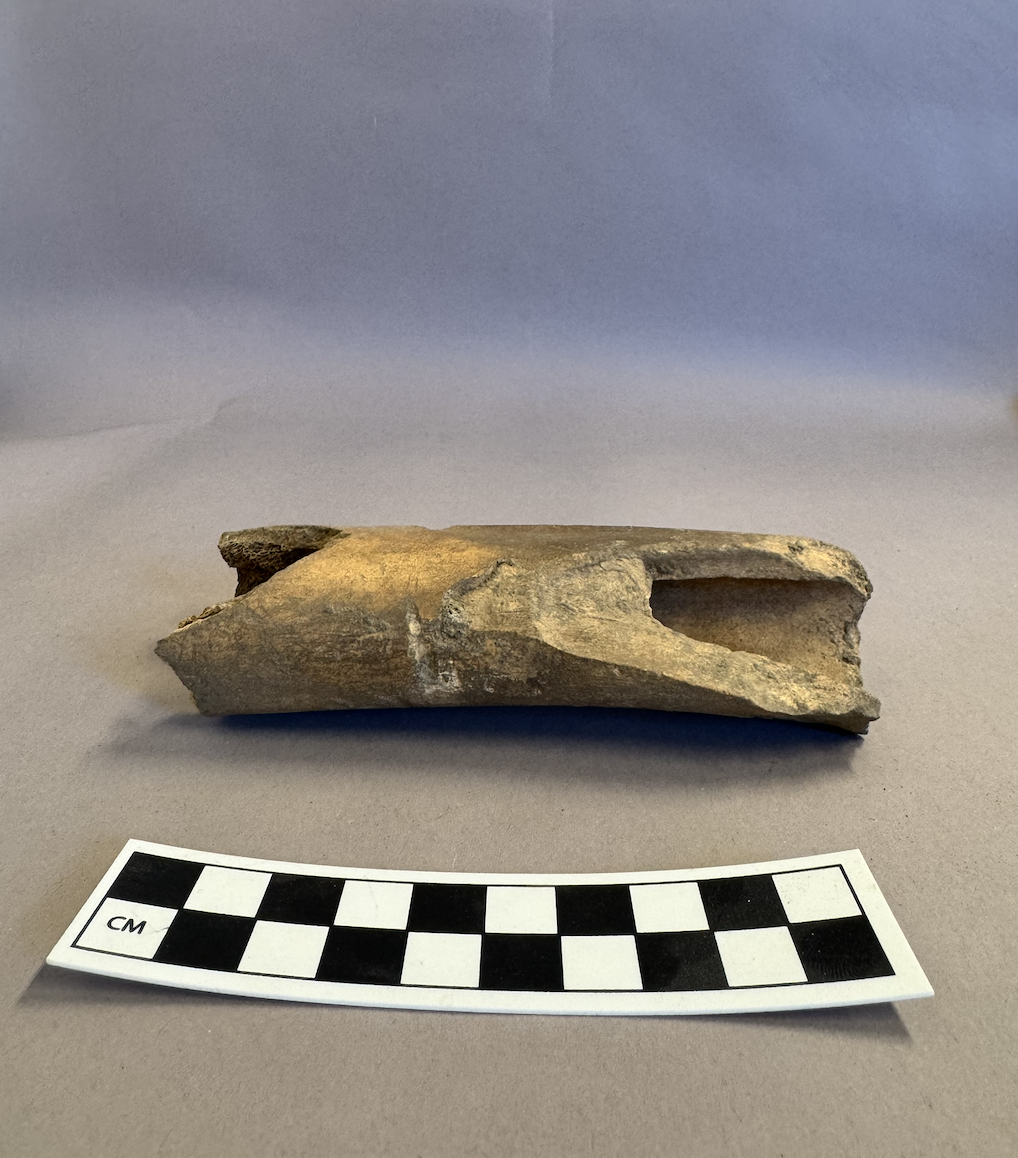
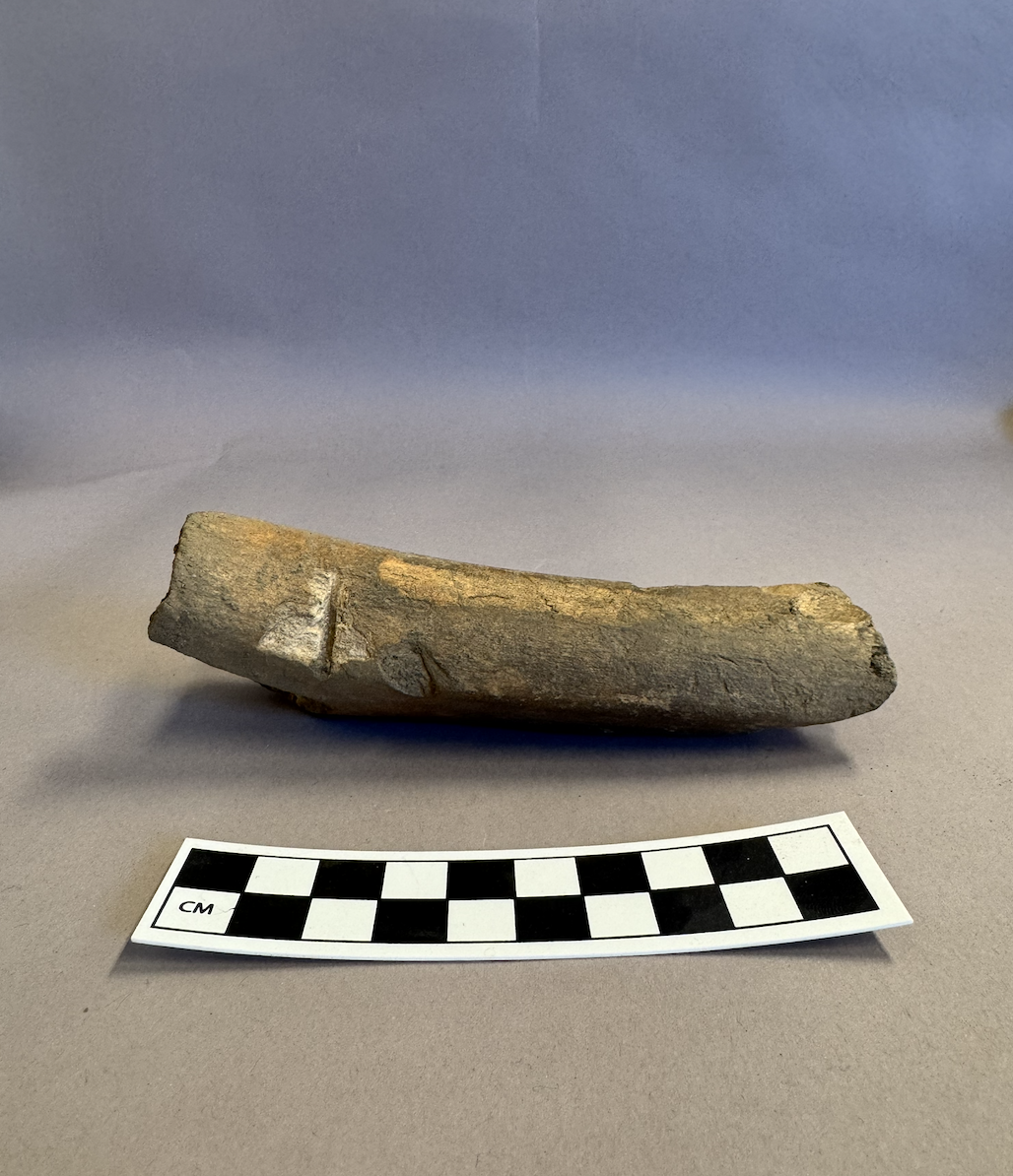
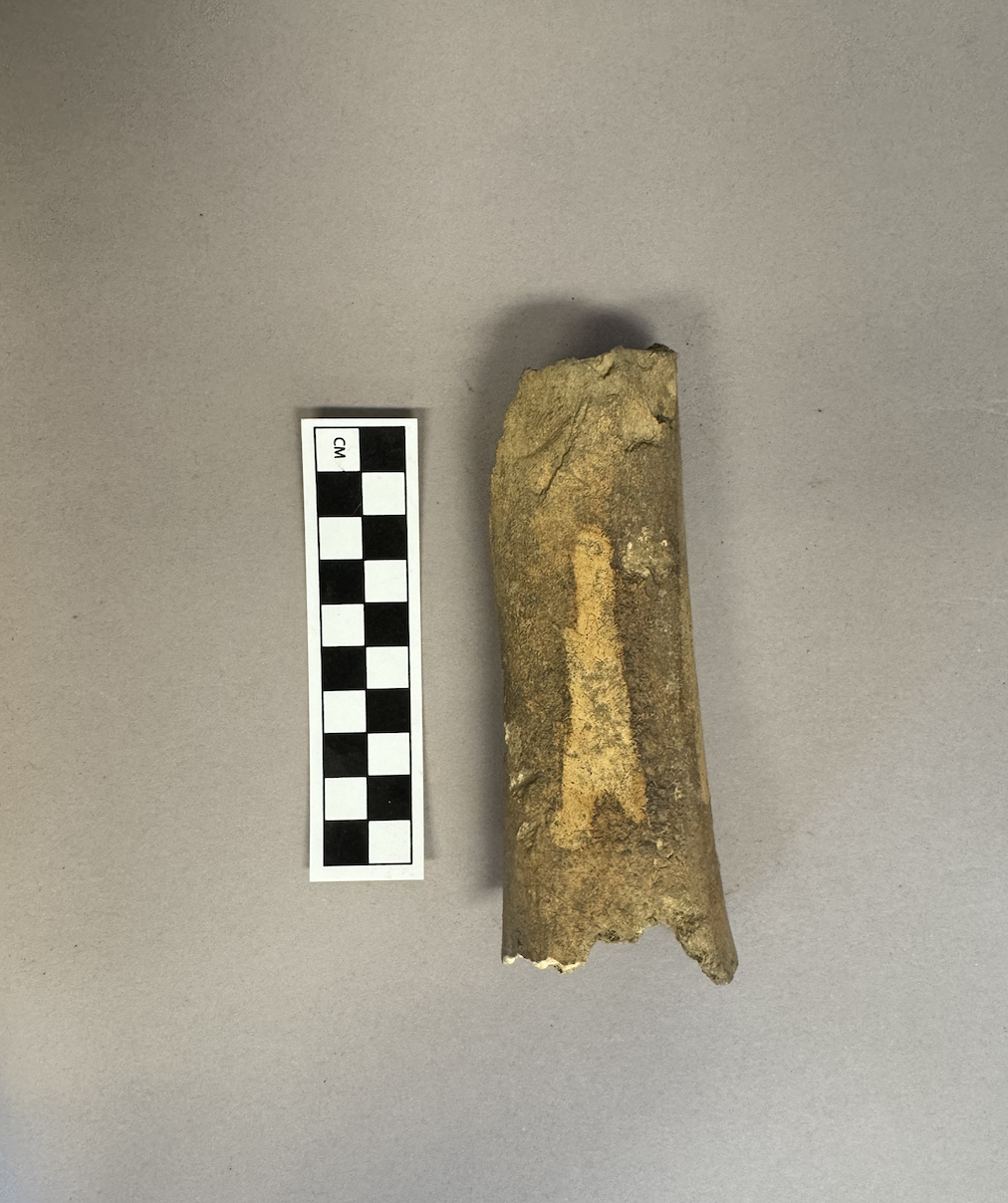
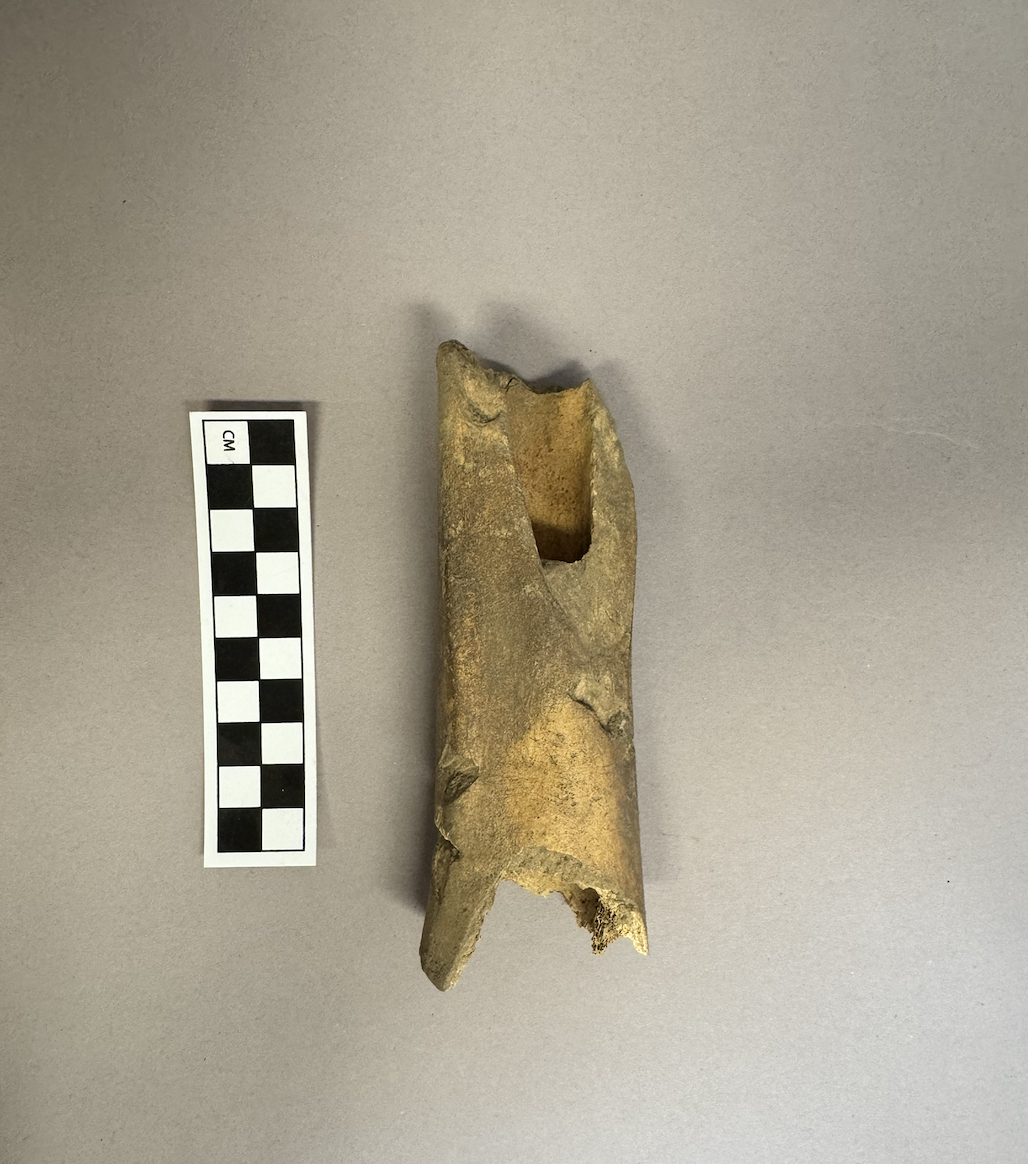
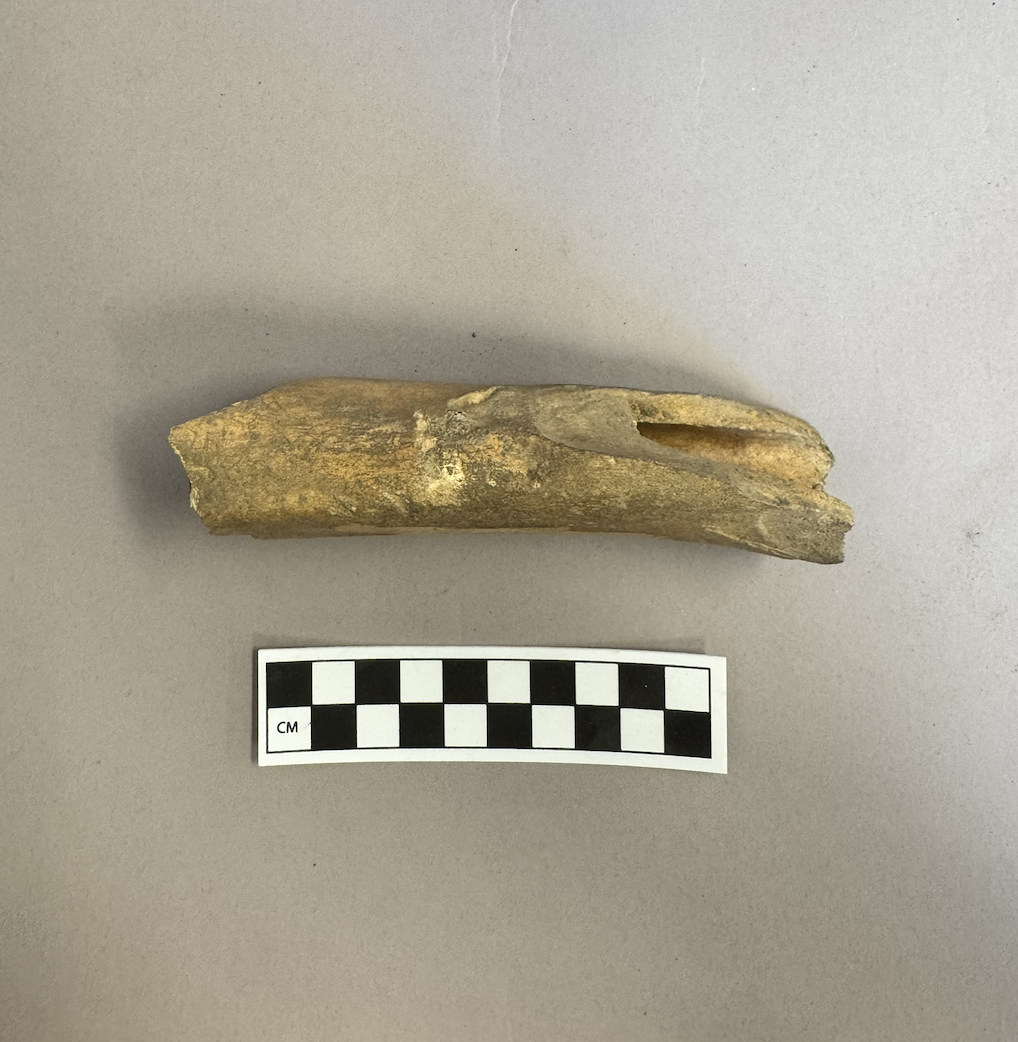
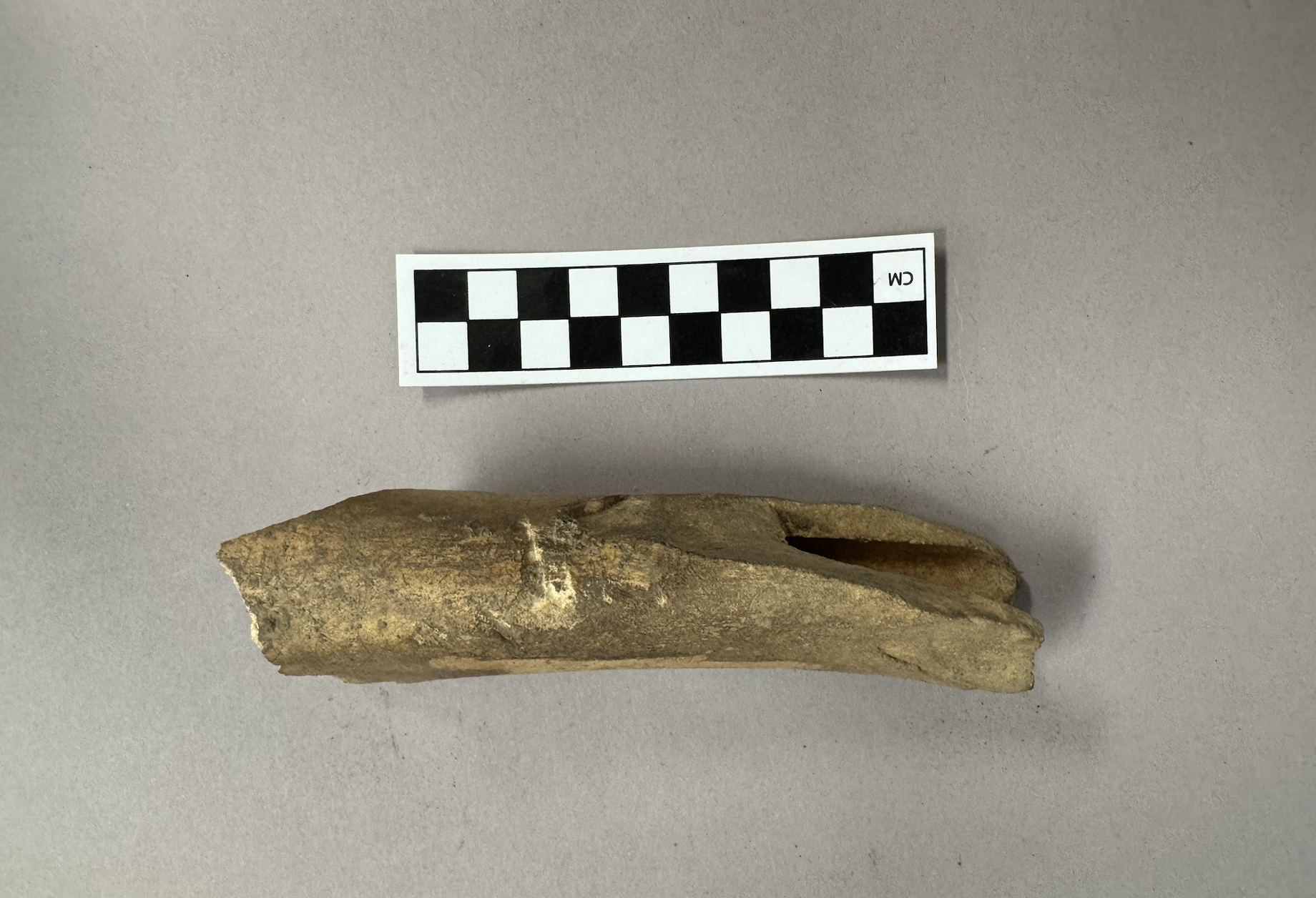
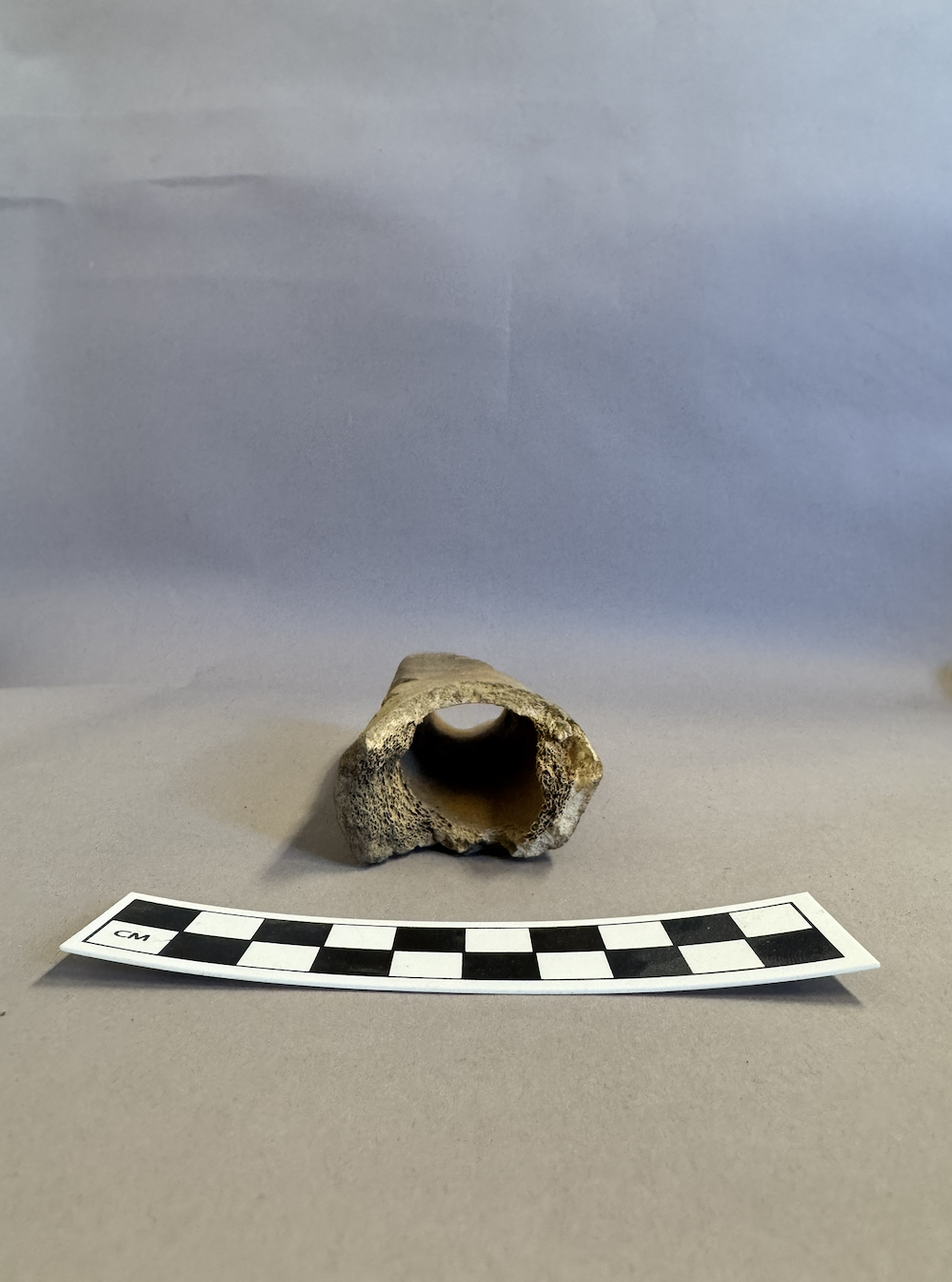
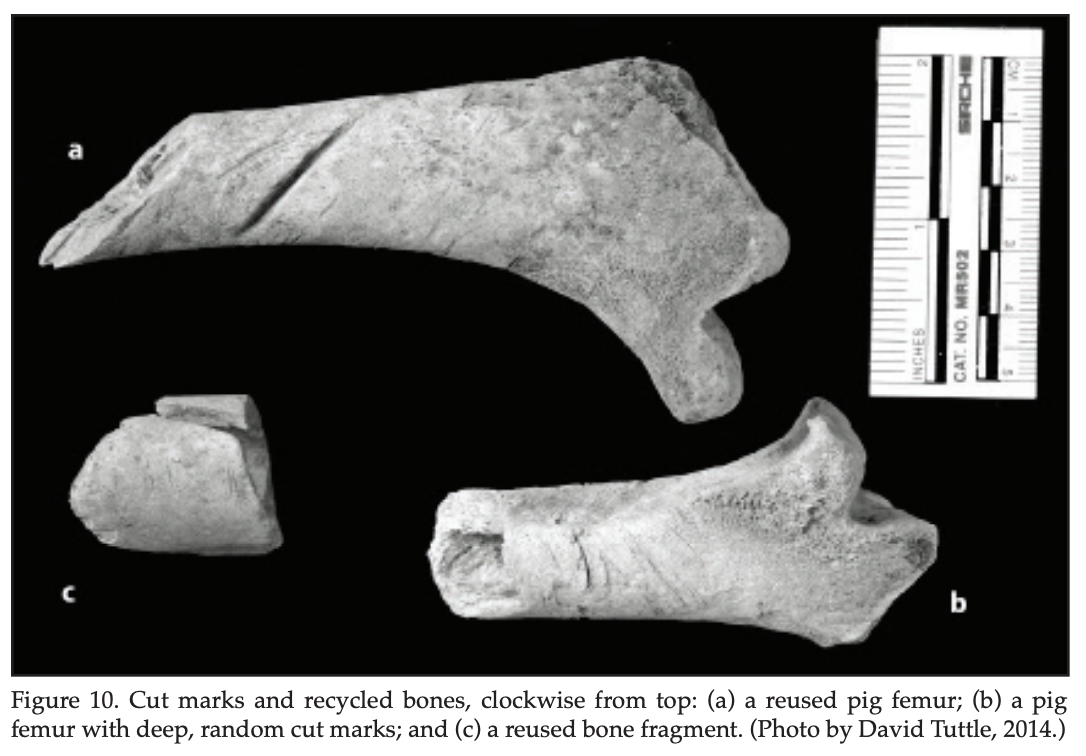
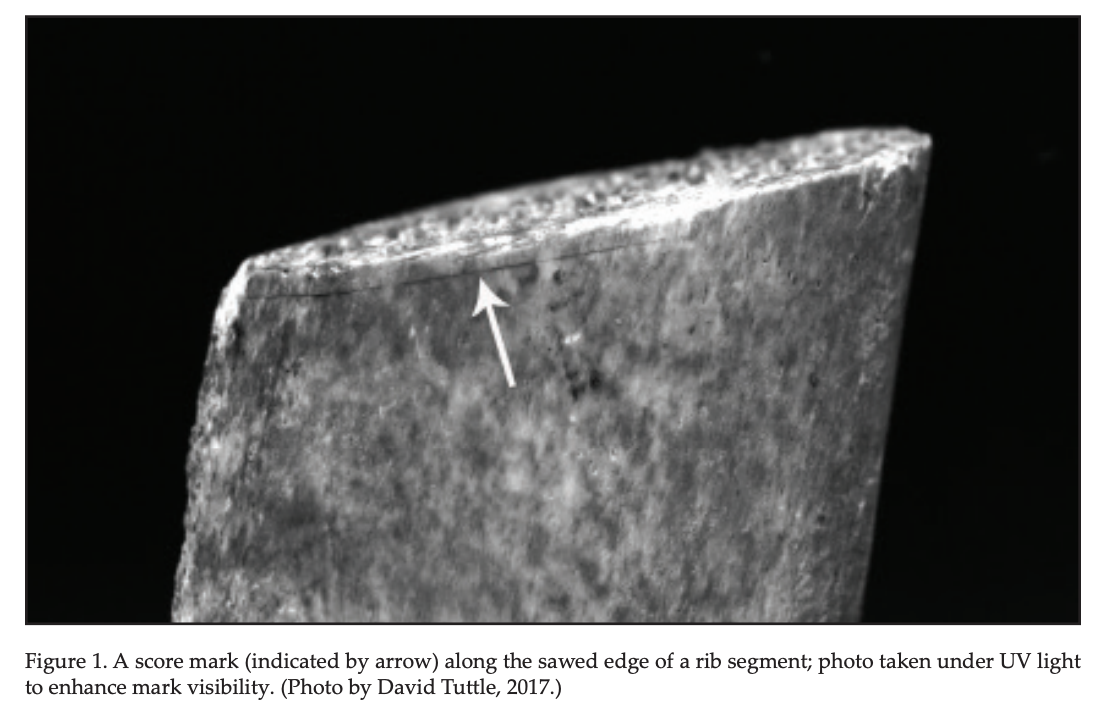
Food fuels us; the bones left in the aftermath reflect the foodways of consumption. This specific bone grants insight into Harvard’s foodways. The large 13.8 cm by 4.5 cm size allowed expert evaluation and comparison to other pig femur images to assume the bone is a pig femur. A presentation of similar pig femur remains underscores the importance of scoring and butcher markings (Zoltucha 2018). The slight and deep indentations inflicted on the bone reflect the consumption of pork on campus while highlighting the role of butchers and chefs.
The foodway journey continues to student life as a Harvard Yard excavation from 1999 discusses the private livestock housed by some Harvard students, potentially placing this femur in an on-campus pen rather than importation (Henrickson 1999). The daily common meals that occurred on campus from 1686 to 1829 further reflect the bones’ consumption as a part of the larger Harvard culture (Hopkins n.d.).
The eventual discarding of the bone is the ultimate end of the foodway journey until excavation, but it also reflects the open-air waste on Harvard’s campus at that time. My dating hypothesis is the late 18th century, reflecting the excavation in unit H980 at Level 6. The amount of debris situated Level 6 with the fire of the first Harvard Hall in 1764. The substantial quantity of nails and glass, assumed to be from Harvard Hall I, along with bone fragments, highlights the femur’s foodway in conjunction with the greater history of Harvard’s reinvention.
Source:
Support Source #1: Journal Article, including archival images and analysis of butchery.
https://orb.binghamton.edu/cgi/viewcontent.cgi?article=1488&context=neha
- The discussion of butchery, including cut marks, with specific archival examples and images of pig femurs, is pertinent to comparing and framing the artifact and understanding of the foodways journey.
Zoltucha Kozub , Andrea
2018 False Starts and Score Marks: New Tools For Historic Butchery Analysis. Northeast Historical Archaeology 47(9). https://orb.binghamton.edu/cgi/viewcontent.cgi?article=1488&context=neha, accessed February 23, 2026.
Support Source #2: Harvard Library Research Guide.
https://guides.library.harvard.edu/c.php?g=310694&p=2072612
- An outline of foodways at Harvard from the seventeenth to the twentieth century to recognize the role that food played in both daily life and the overall college mission.
Hopkins, Pam
N.d. Research Guides: History of Food and Dining at Harvard: Entrées. https://guides.library.harvard.edu/c.php?g=310694&p=2072612, accessed February 23, 2026.
Support Source #3: The Harvard Crimson article from 1999.
https://www.thecrimson.com/article/1999/6/7/yard-dig-reveals-taste-of-18th/
- 1999 Harvard Crimson article outlining Harvard Yard archaeological discoveries. Discusses the consumption of animals, private livestock housing by students in the yard, trash disposal, and more, leading to animal remains.
Henrickson, Sarah
1999 Yard Dig Reveals Taste of 18th Century | News | The Harvard Crimson. https://www.thecrimson.com/article/1999/6/7/yard-dig-reveals-taste-of-18th/, accessed February 23, 2026.
Contributor:
Charlotte Hodgson
Object Name:
Animal bone, pig femur
Inventory Description:
Animal bone, pig femur
Peabody Number:
2025.8.49
Intrasite:
H980
Depth:
78 - 85 cmbd
Class 1:
Organic
Class 2:
Bone
Class 3:
Faunal remain
Quantity:
1
Height (cm):
13.8
Width (cm):
4.8
Depth/Thickness (cm):
3
Century:
18th Century