Manganese Rhenish salt-glaze stoneware (Archaeological Find)
Files

Title:
Manganese Rhenish salt-glaze stoneware
Subject:
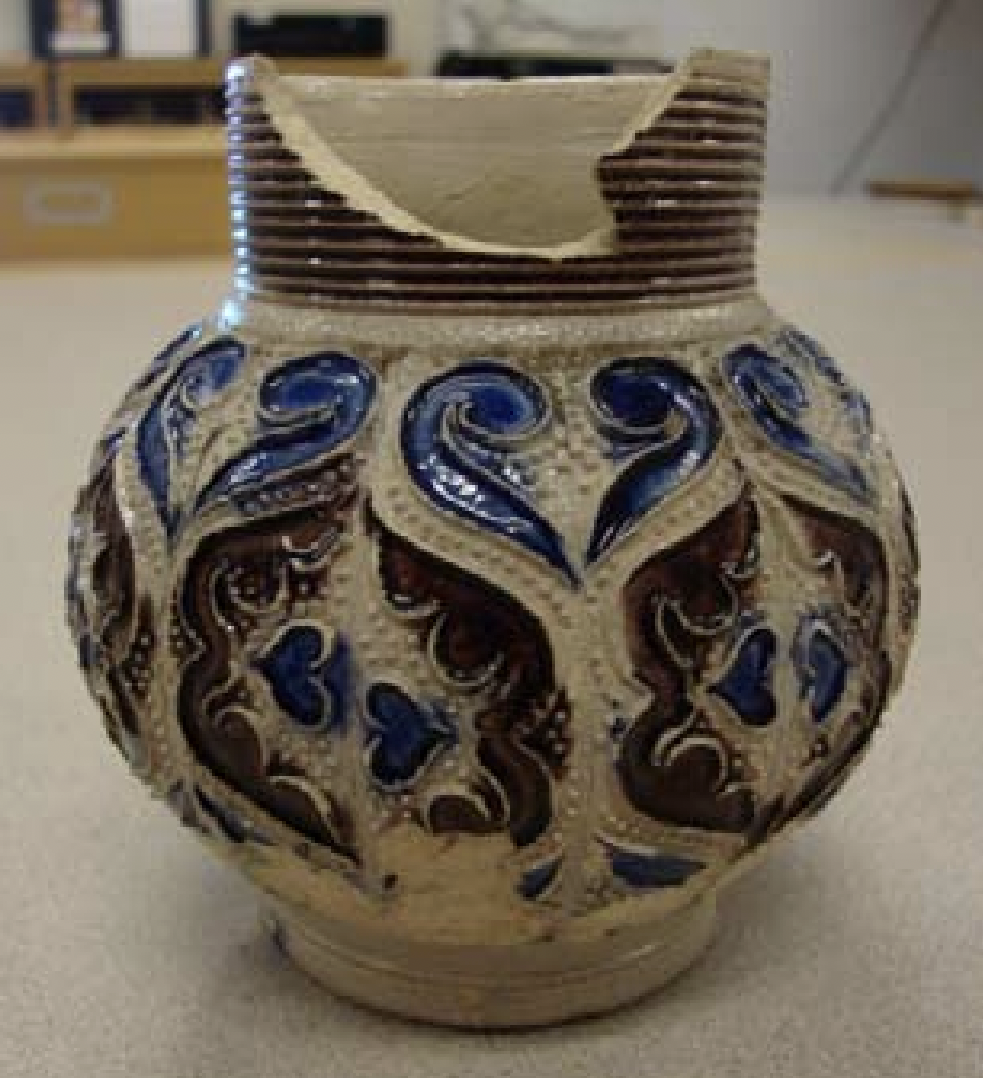
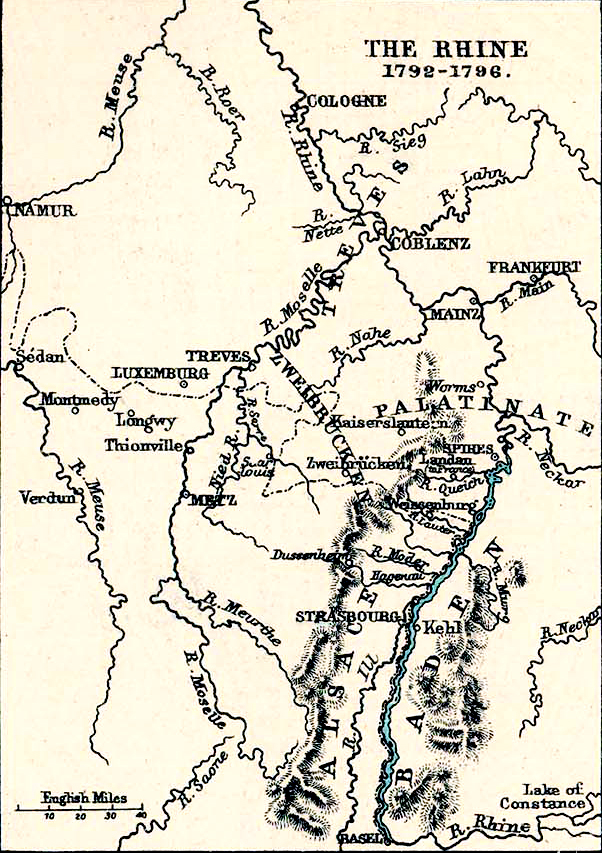
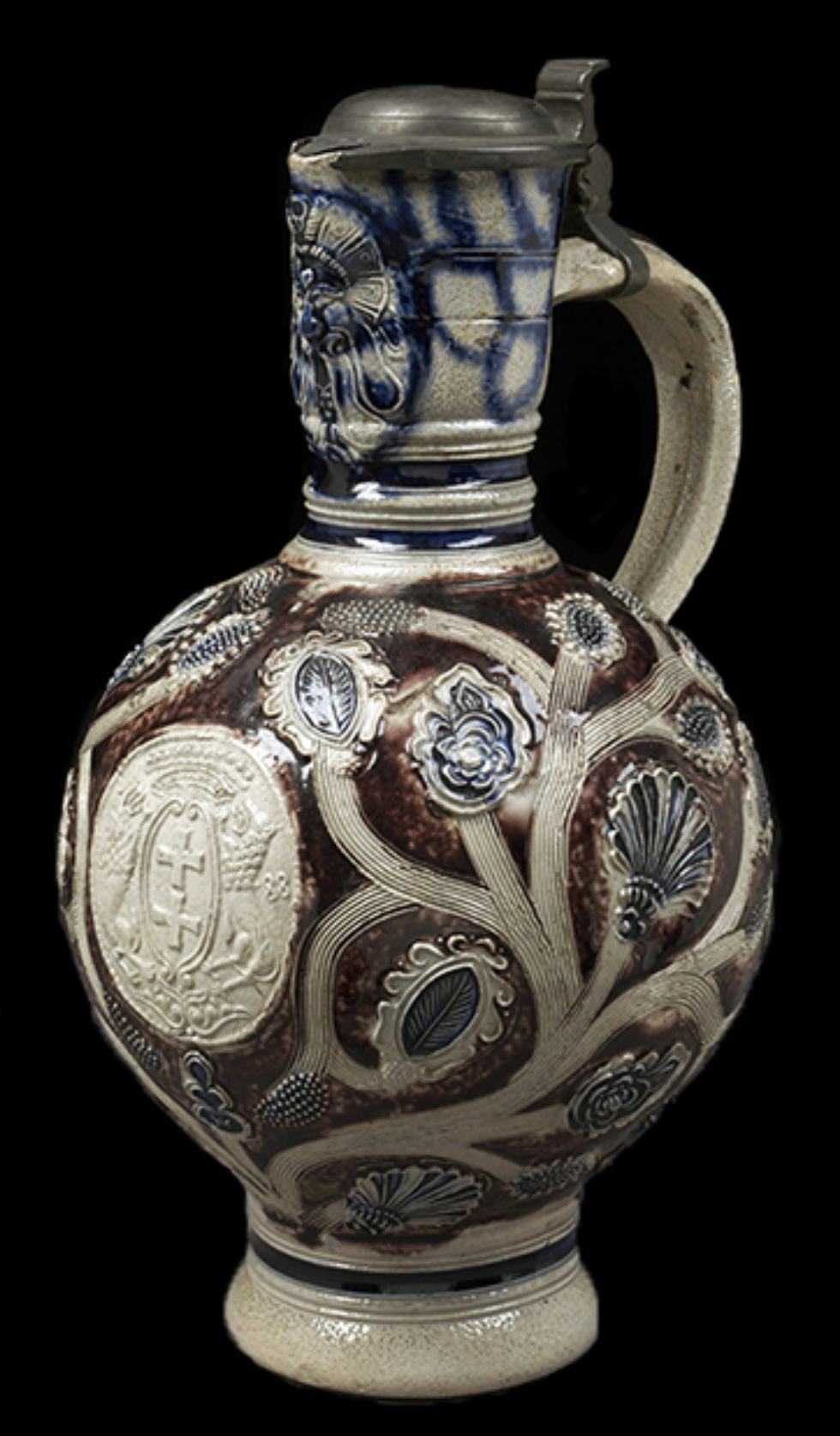
Excavated behind Holden Chapel, this ceramic sherd carries the material signature of early modern Atlantic trade. Its dense gray fabric and salt-glazed, non-porous surface are characteristic of Rhenish blue and gray stoneware produced in the Westerwald region of Rhineland (Janowitz). The presence of manganese purple beneath unpainted incised ribbing indicates manufacture after manganese decoration entered the Westerwald repertoire in the mid-seventeenth century (Tolbert and Warrenfeltz 52), suggesting production in the late seventeenth or early eighteenth century. Such wares, which were originally crafted for the German middle class, traveled through English trade networks and reached North American markets in substantial quantities (Tolbert and Warrenfeltz 49). Durable, transportable, and well suited to storage, Rhenish stoneware traveled with merchants along the Rhine River’s commercial corridor (see map route above).
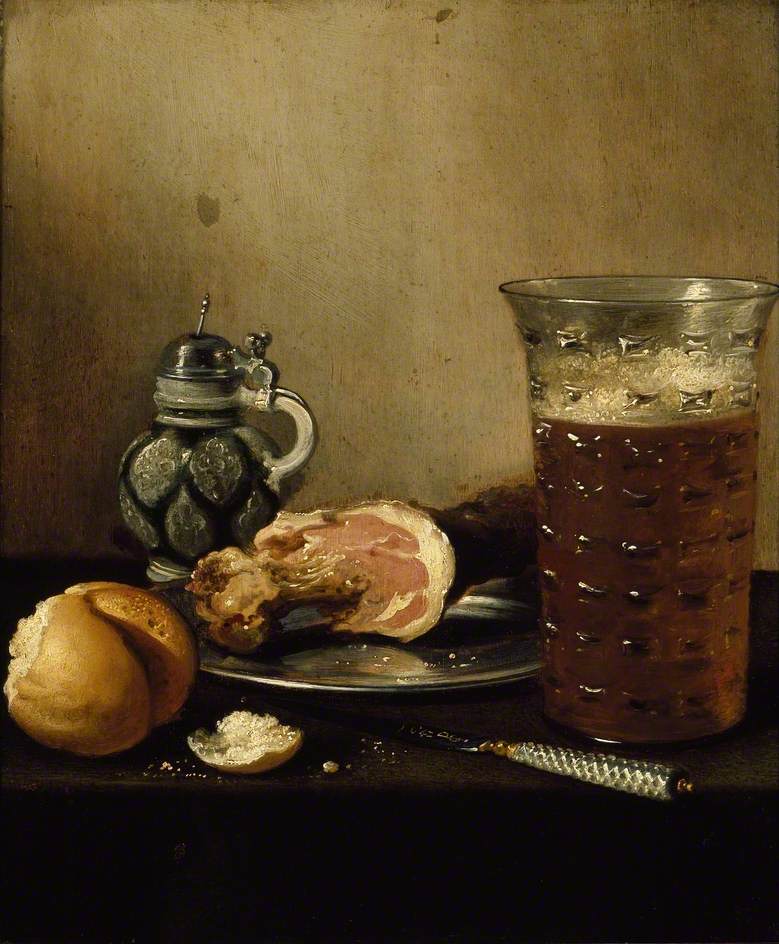
The cultural familiarity of this material is also evident in mid-seventeenth-century Dutch art: the Ashmolean Museum notes that Westerwald stoneware had recently entered Pieter Claesz’s studio props in the 1640s and remained in use into the early 1650s (Ashmolean Museum). Its appearance in Still Life with a Ham (1642) helps to further animate our archaeological find by situating such vessels within scenes of food, drink, and domestic exchange. Though fragmentary, this sherd from the Holden Chapel site embodies a broader history of production, circulation, and everyday consumption in a way that links Harvard’s early landscape to the commercial networks that structured colonial life.
Description:
Rhenish stoneware sherd recovered from Unit H981 behind Holden Chapel. Exhibits gray fabric, salt glaze, manganese banding, and incised ribbing.
Source:
Janowitz, Meta. “Maryland Department of Planning Jefferson Patterson Park & Museum.” MDP, Jefferson Patterson Park and Museum, 7 Oct. 2018, jefpat.maryland.gov/Pages/default.aspx
Tolbert, Maria and Justin Warrenfeltz. “An Unsurprising Find: Rhenish Stoneware at Westwood Manor.” The Westwood Manor Archaeological Collection: Preliminary Interpretations, edited by Julia A. King et al., Archaeology Practicum Class, St. Mary’s College of Maryland, May 2010, pp. 49–56. Colonial Encounters, colonialencounters.org/files/sitereports/Westwood-1.pdf
“Rhine River Map.” Emerson Kent, www.emersonkent.com/map_archive/rhine_river.htm. Accessed 27 Feb. 2026.
“Still Life with a Ham.” Ashmolean Museum, University of Oxford, 1642, https://artuk.org/discover/artworks/still-life-with-a-ham-141824. Accessed 27 Feb. 2026.
Contributor:
David Broussard
Object Name:
Manganese Rhenish salt-glaze stoneware
Peabody Number:
2025.8.20
Culture/Period:
17th - 18th century
Intrasite:
Unit 981 Level 2
Depth:
35 cm bd - 50 cm bd
Class 1:
Ceramic
Class 2:
Stonewear
Class 3:
Sherd
Quantity:
1
Height (cm):
2.5cm
Width (cm):
1.4cm
Depth/Thickness (cm):
0.5cm
Notes:
Excavated in Unit H981 by David Broussard and Kelsey Culbertson
Century:
17th - 18th century