Domesticated Animal Bone Fragment (Archaeological Find)
Files
Title:
Domesticated Animal Bone Fragment
Subject:
Domesticated Animal Bone Fragment
Description:
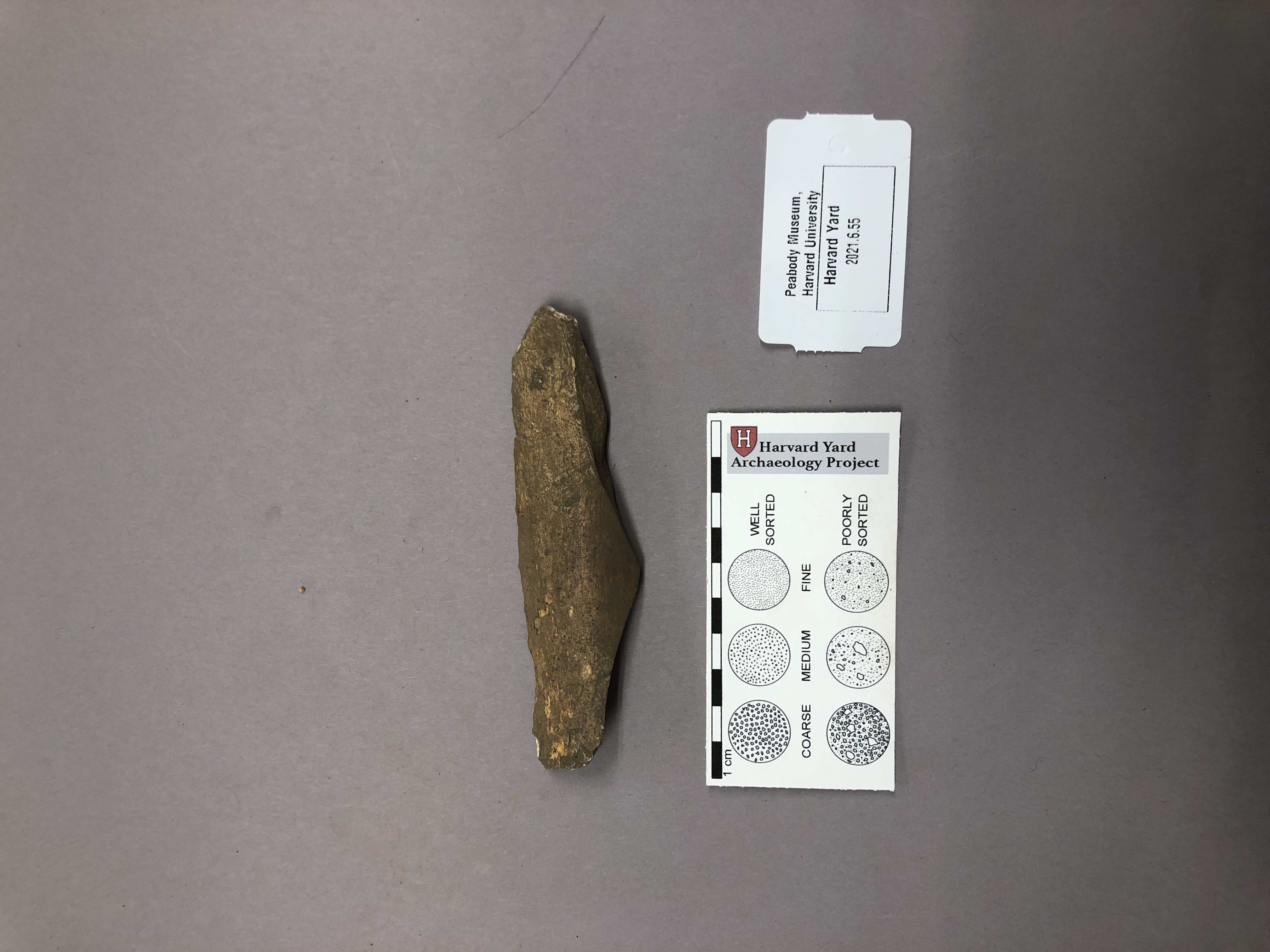
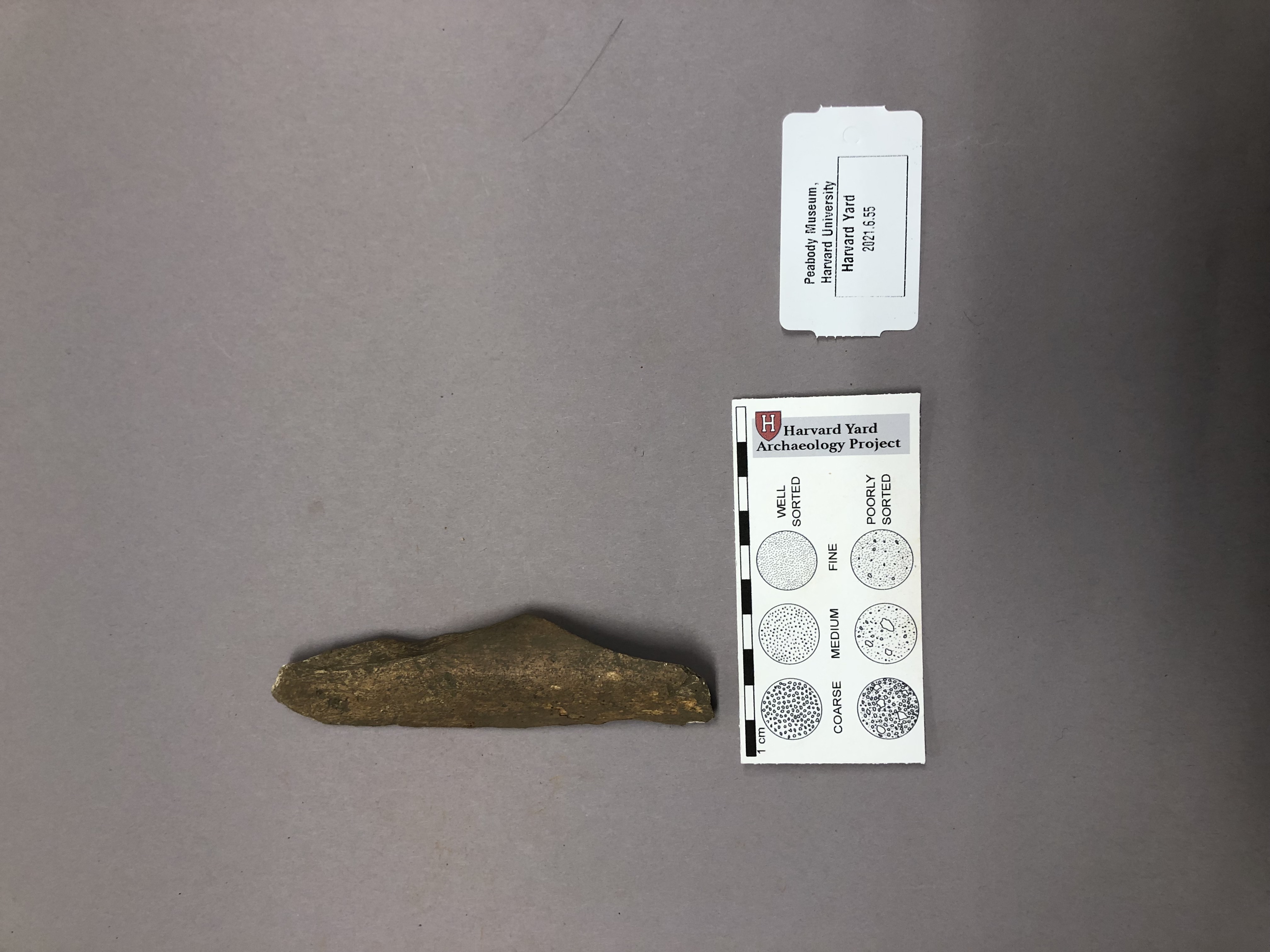
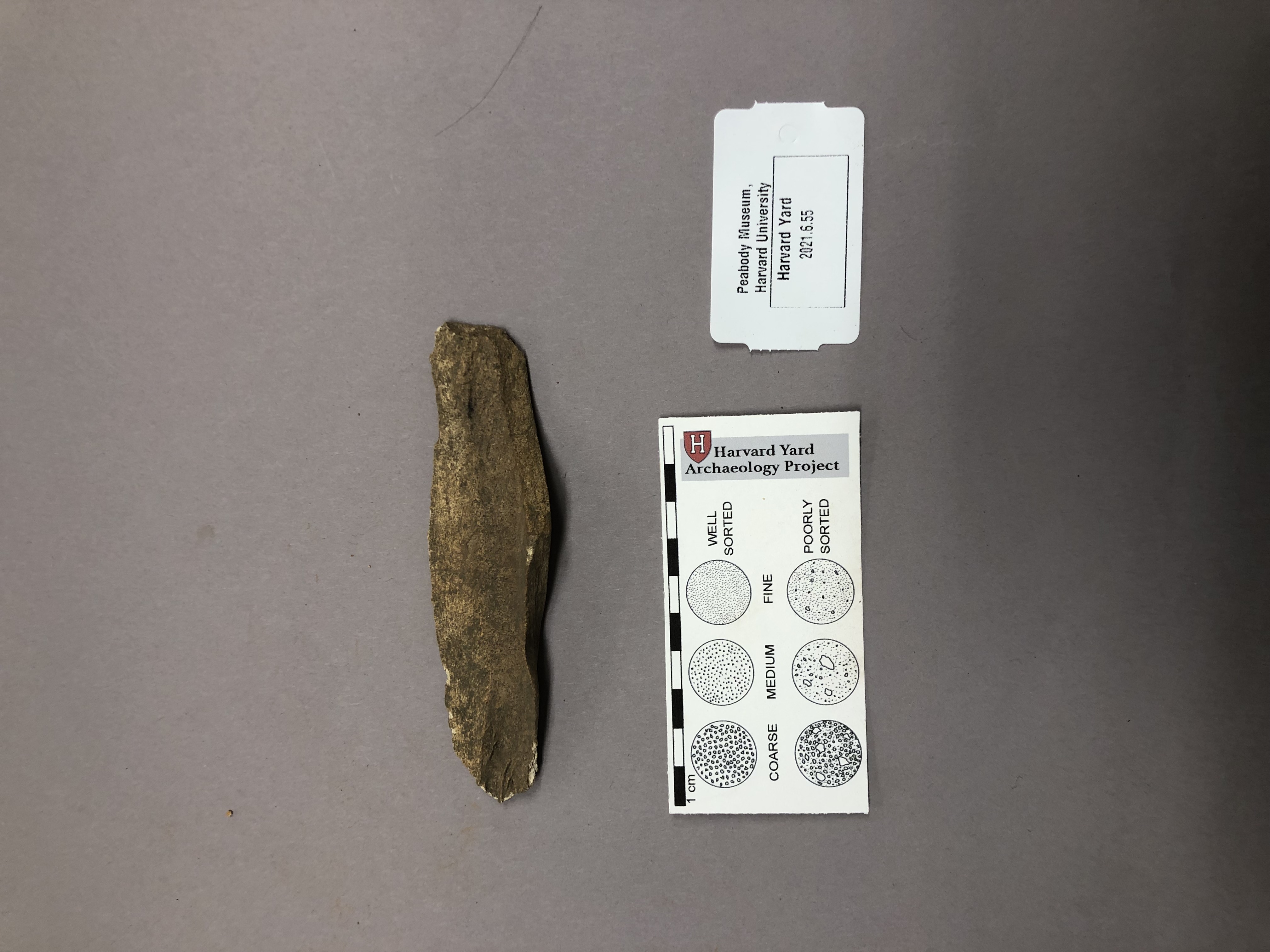
“A bone?” calls one of my classmates. “A human bone?” Thankfully, the bone I’m holding did not belong to a person–there’d be a lot of red tape if it had, not to mention the trauma of finding a human body less than a meter underneath the ground near a building I’d lived in only 3 years earlier. No, Aurora, the HYAP 2021 Teaching Fellow, says: this is a fragment of a domesticated animal’s longbone, probably that of a cow or a pig. Since we found it in a layer of soil that has been virtually untouched since the 17th century, it's a safe bet that the animal the bone belonged to died nearly 400 years ago.
Unfortunately, while we have a general idea of what type of animal this bone may have belonged to and when it died, we have no way to tell how old it was at the time (at least, not while we're in the field). There are 2 main ways we could have figured this out, both of which are off the table:
1) If we had the animal’s jawbone instead of a longbone, we could have looked at how worn down its teeth were from grinding up plants throughout its life. The older the animal, the more wear and tear (Bowen 140).
2) If we had an end of the bone instead of the middle, we would have been able to look at the epiphyses (the ends of longbones like the femur). Epiphyses become attached to longbones in a predictable pattern throughout an animal’s development cycle, and so are useful in telling the age of the animal a bone belonged to (Bowen 140).
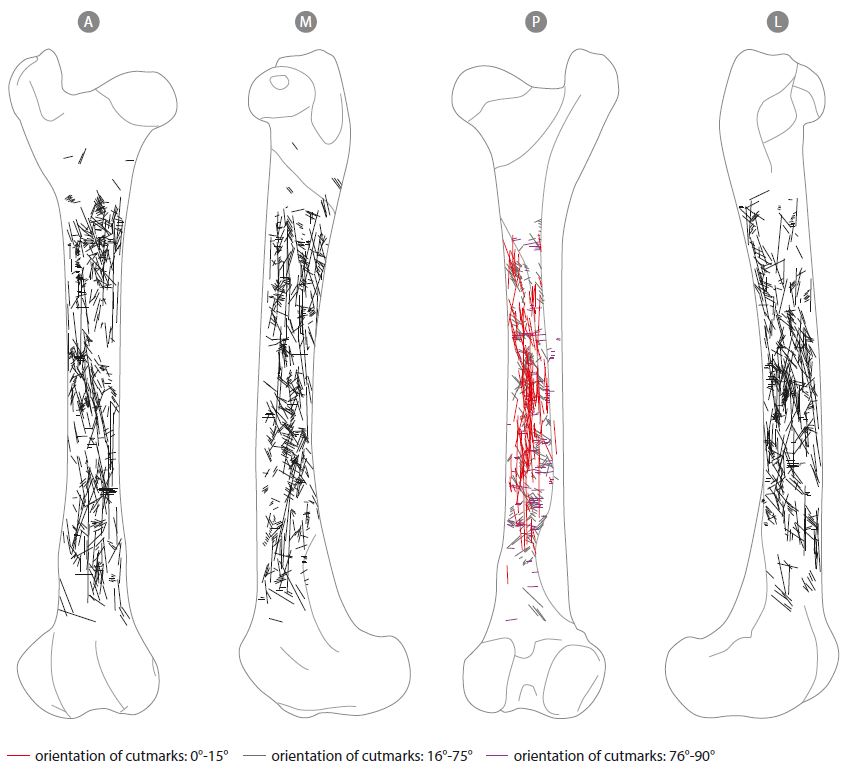
The cause of death of the animal is also a little shaky. Disease was not very common in European livestock in the early colonial period. Yes, the Columbian Exchange was terrible for human health; New World and Old World diseases spread through Indigenous and colonial communities like wildfire (Nunn and Quian 164). Animals like pigs and cows, however, were now separated from Old World diseases by an ocean and had no New World relatives from which to contract diseases (Smithcors 172). The first recorded large-scale epizootic (animal epidemic) in the colonies did not occur until 1699–the very tail end of the century this bone probably came from (Smithcors 172). That said, it is still likely that this animal died of natural causes, perhaps an isolated illness or simply old age. How can we tell? Butchering marks, the telltale signs that an animal has been killed for its meat, are entirely absent.
Source:
Bowen, J. To market, to market: Animal husbandry in New England. Hist Arch 32, 137–152 (1998). https://doi-org.ezp-prod1.hul.harvard.edu/10.1007/BF03374266
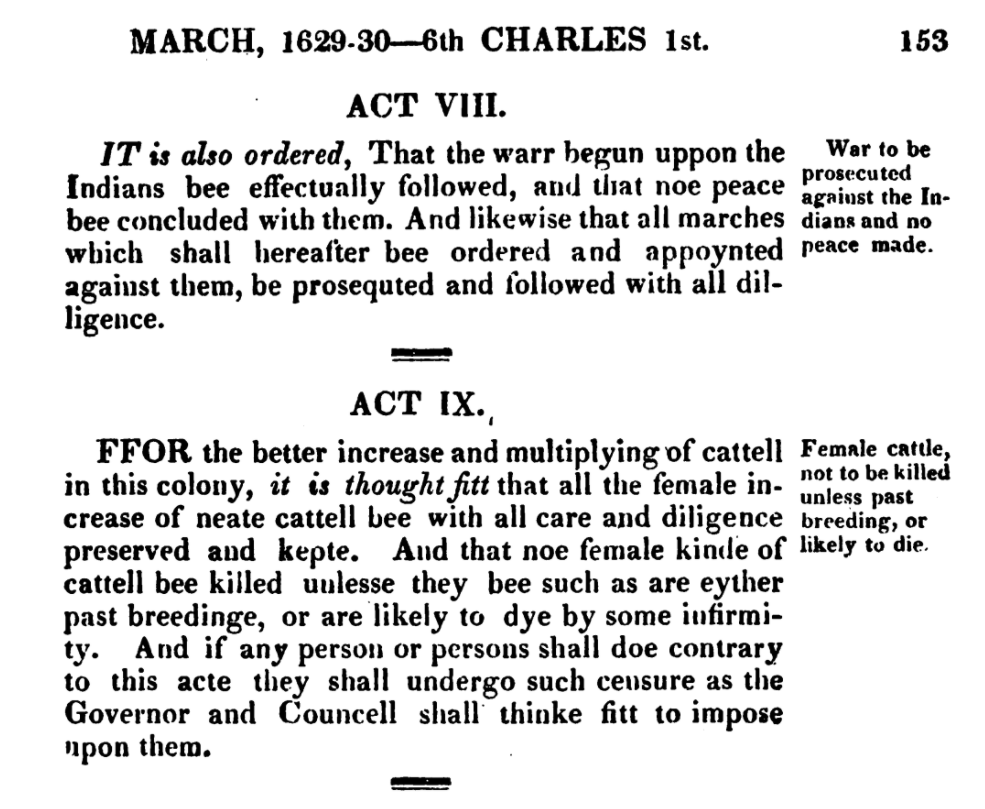
Hening, W. W. (1823). The statutes at large : Being a collection of all the laws of virginia, from the first session of the legislature in the year 1619. HathiTrust. Retrieved February 25, 2022, from https://babel.hathitrust.org/cgi/pt?id=uc1.31210002606166&view=1up&seq=185&q1=breed
Qian, N. & Nunn, N. (2010). The Columbian Exchange: A history of disease, food, and ideas. Retrieved February 25, 2022, from https://www.kellogg.northwestern.edu/faculty/qian/resources/NunnQianJEP.pdf
Smithcors, J. F. (1958). ANIMAL DISEASE IN COLONIAL AMERICA. Bulletin of the History of Medicine, 32(2), 171–176. http://www.jstor.org/stable/44444021
Soulier, M.-C., Costamagno, S., Lemeur, C., & Val, A. (2019, November 1). Analysis of the faunal remains: Results. Palethnologie. Archéologie et sciences humaines. Retrieved February 25, 2022, from https://journals.openedition.org/palethnologie/4153?lang=en
Object Name:
Domesticated Animal Bone Fragment
Inventory Description:
A fragment of a bone from a domesticated animal, probably a cow or a pig.
Peabody Number:
2021.6.55
Culture/Period:
c. 1600s
Intrasite:
H971 Level 6
Depth:
37 cm - 64 cm
Class 1:
Organic
Class 2:
Bone
Class 3:
Fragment
Quantity:
1
Height (cm):
13 cm
Width (cm):
3.5 cm
Depth/Thickness (cm):
0.3 cm
Century:
c. 17th