Earthenware body sherd with slip decoration (Archaeological Find)
Files
Title:
Earthenware body sherd with slip decoration
Subject:
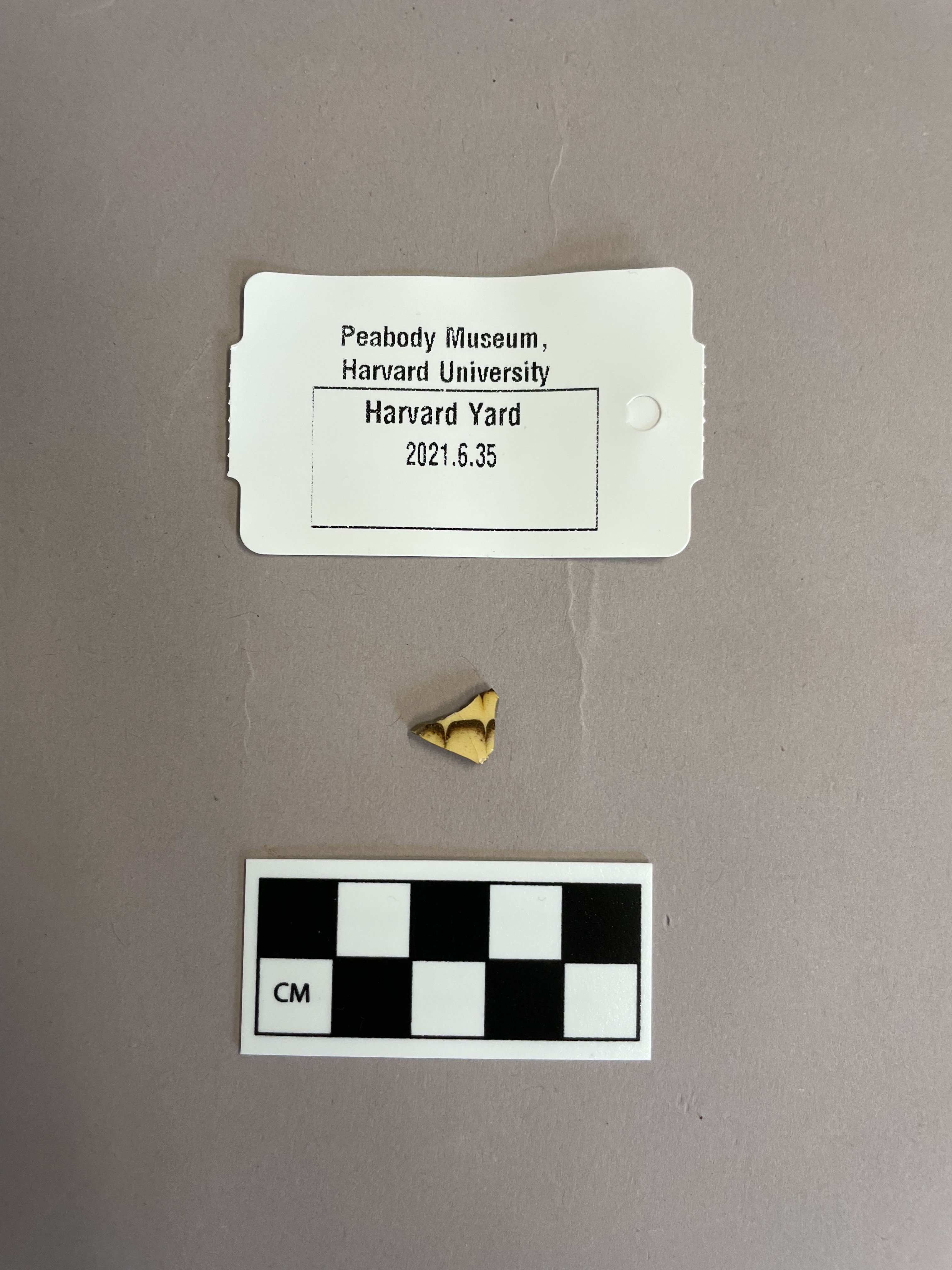
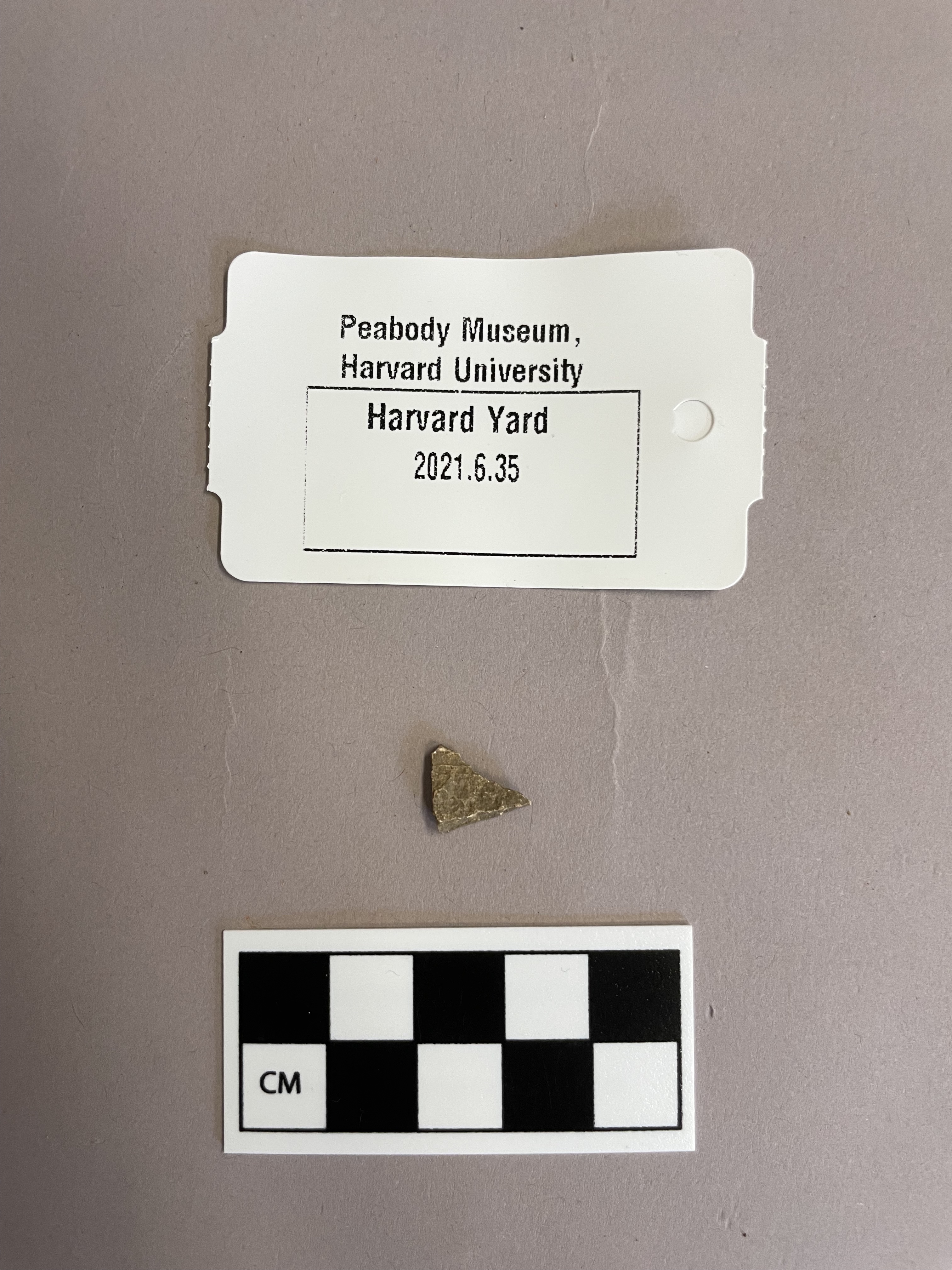
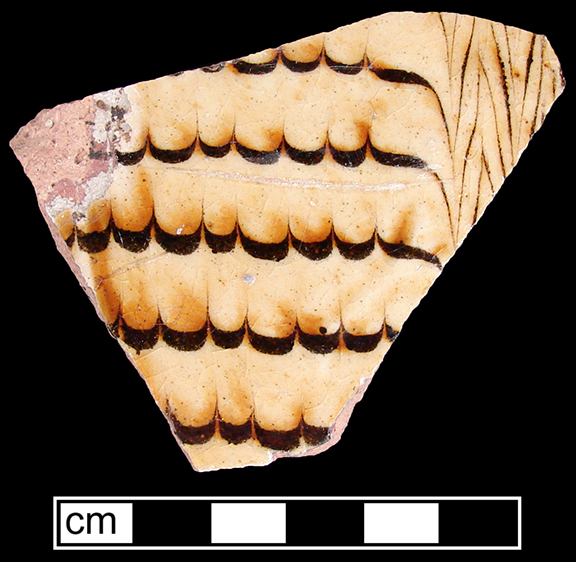
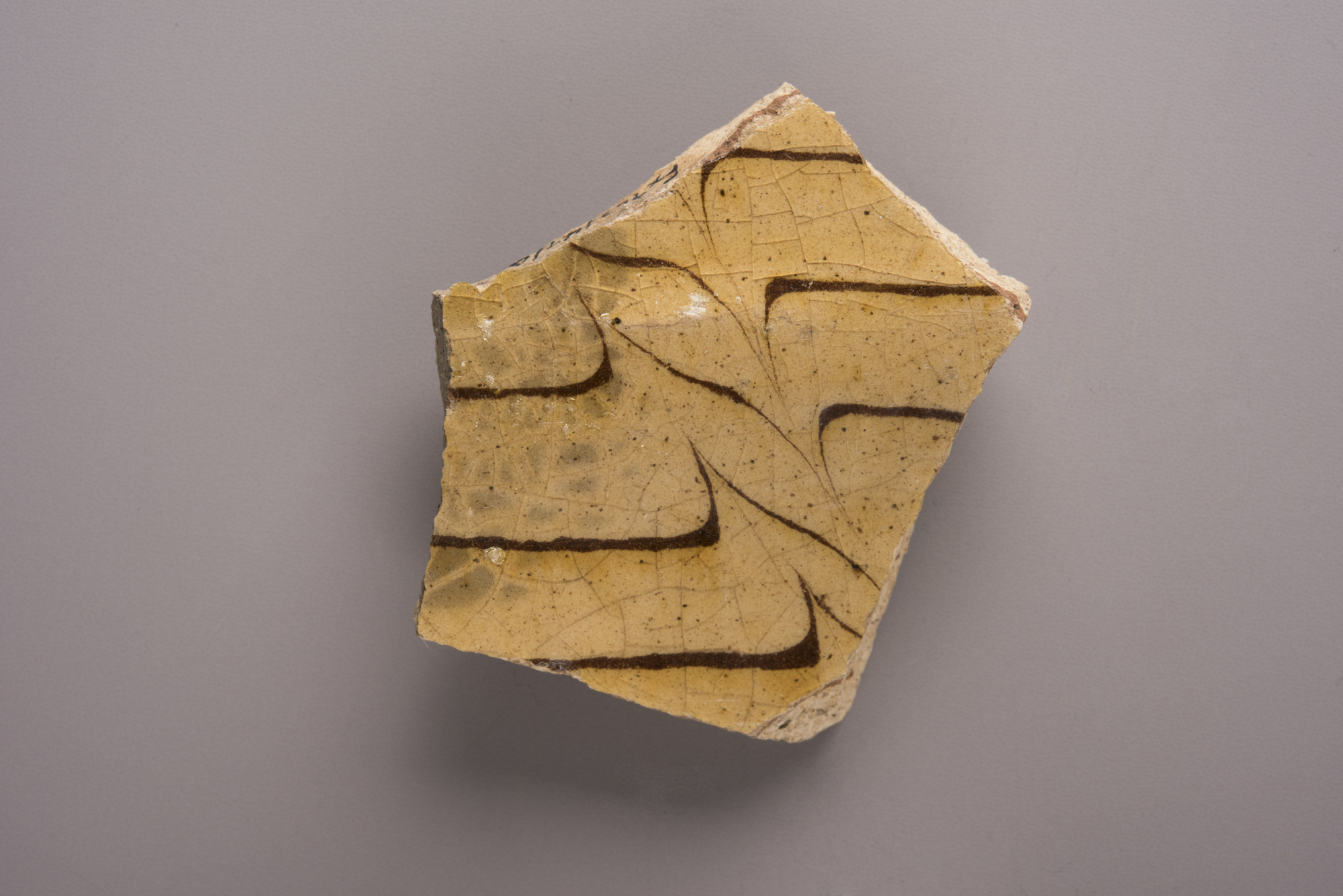
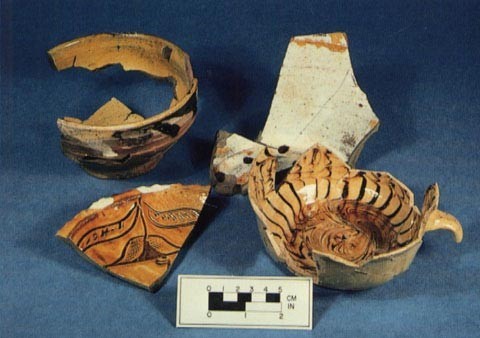
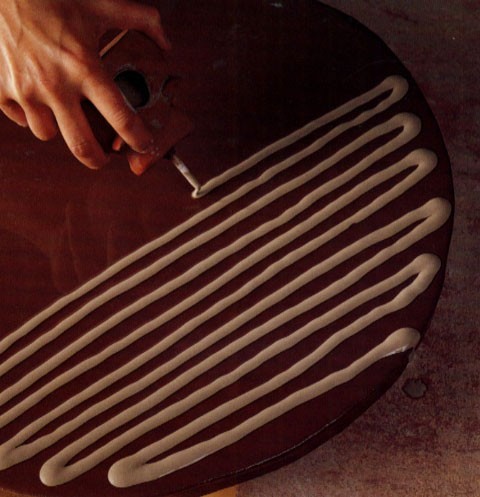
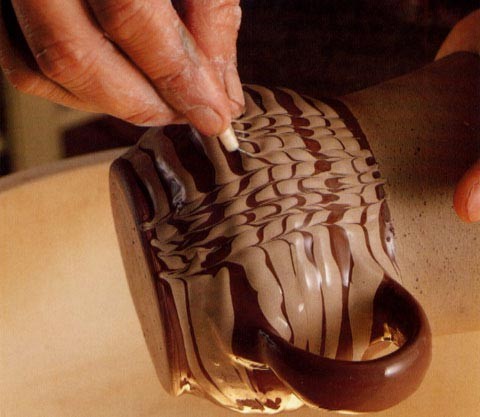
This trailed and combed North Midlands/Staffordshire-type slipware sherd is an example of the common ceramics used at Harvard and the North American Colonies as a whole. Earthenware ceramics like the sherd here were the easiest and cheapest to produce, and thus were the most widely used in England and the Colonies (Hume 1969, 102). This particular type of earthenware, North Midlands/Staffordshire-type slipware, was developed in the Staffordshire region of England in the mid-17th century (Diagnostic Artifacts in Maryland). While some earthenware decorated with slip (liquified white clay used to decorate a piece), or slipware, was produced in the Colonies beginning in the late 17th century, slipware used in the Colonies was often produced in England itself and brought to the Colonies on ships (Deetz 1996, 70; Diagnostic Artifacts in Maryland). This sherd demonstrates the decorative techniques of trailing, where a tube or quill would be used to trail slip across a vessel; and combing, where a pointed tool would be dragged through the applied wet slip to create patterns of peaks and troughs, like those seen on the sherd (Diagnostic Artifacts in Maryland). Given that this type of slipware was widely and cheaply produced, this sherd was likely part of a standard ceramic item that a Harvard student owned, such as a plate or dish. It is probably from the time period of 1660 - 1775, as North Midlands/Staffordshire-type slipware began production around 1660 and stopped being exported to the Colonies in the 1770s (Diagnostic Artifacts in Maryland).
Source:
Deetz, James. 1996. In Small Things Forgotten: An Archaeology of Early American Life. New York: Anchor Books.
“Figure 21.” 2001. In Michelle Erickson and Robert Hunter, “Dots, Dashes, and Squiggles: Early English Slipware Technology.” In Ceramics in America, edited by Robert Hunter. Accessed February 23rd, 2022. https://chipstone.org/article.php/8/Ceramics-in-America-2001/Dots,-Dashes,-and-Squiggles:-Early-English-Slipware-Technology-.
“Figure 31.” 2001. In Michelle Erickson and Robert Hunter, “Dots, Dashes, and Squiggles: Early English Slipware Technology.” In Ceramics in America, edited by Robert Hunter. Accessed February 23rd, 2022. https://chipstone.org/article.php/8/Ceramics-in-America-2001/Dots,-Dashes,-and-Squiggles:-Early-English-Slipware-Technology-.
Hume, Ivor Noël. 1969. A Guide to Artifacts of Colonial America. Philadelphia, PA: University of Pennsylvania Press.
Hunter, Robert. “Figure 32.” 2001. In Michelle Erickson and Robert Hunter, “Dots, Dashes, and Squiggles: Early English Slipware Technology.” In Ceramics in America, edited by Robert Hunter. Accessed February 23rd, 2022. https://chipstone.org/article.php/8/Ceramics-in-America-2001/Dots,-Dashes,-and-Squiggles:-Early-English-Slipware-Technology-.
“North Midlands (Staffordshire-Type) Slipware.” Diagnostic Artifacts in Maryland website. Accessed February 23rd, 2022. https://apps.jefpat.maryland.gov/diagnostic/ColonialCeramics/ColonialWare-thumbnails/NorthMidlands-Staffordshire-Slipware_images.html#Hanley7.
“Staffordshire slipware trailed and combed dish or plate.” Mount Vernon website. Accessed February 23rd, 2022. https://www.mountvernon.org/preservation/archaeology/archaeology-online/object/1722392#-.
Object Name:
Earthenware body sherd with slip decoration
Inventory Description:
Earthenware body sherd with slip decoration. North Midlands/Staffordshire-type slipware. Trailed and combed decorative pattern.
Peabody Number:
2021.6.35
Culture/Period:
1660-1775
Intrasite:
H974, Level 1
Depth:
18-28cm
Class 1:
Ceramic
Class 2:
Sherd
Class 3:
Body
Quantity:
1
Height (cm):
1.3
Width (cm):
1
Depth/Thickness (cm):
.2
Century:
17th/18th