Browse Items (1152 total)
Sort by:
Journal Entry: April 1768*
Mother and Father just paid a visit. Boring, as usual. Before they left for home Mother left me a gift: a tea set. As if I needed another one! Mother had insisted on giving me a set when I first left to come to the…
Mother and Father just paid a visit. Boring, as usual. Before they left for home Mother left me a gift: a tea set. As if I needed another one! Mother had insisted on giving me a set when I first left to come to the…

A small piece of curved, thick amber glass with many scratch marks on the surface.
Hello, my name is Isaac Emerson and I am currently a first year student at Harvard College. I followed in my father’s footsteps by studying at Cambridge, although, right now I’m struggling to see myself earning my diploma. See, soon upon my arrival…
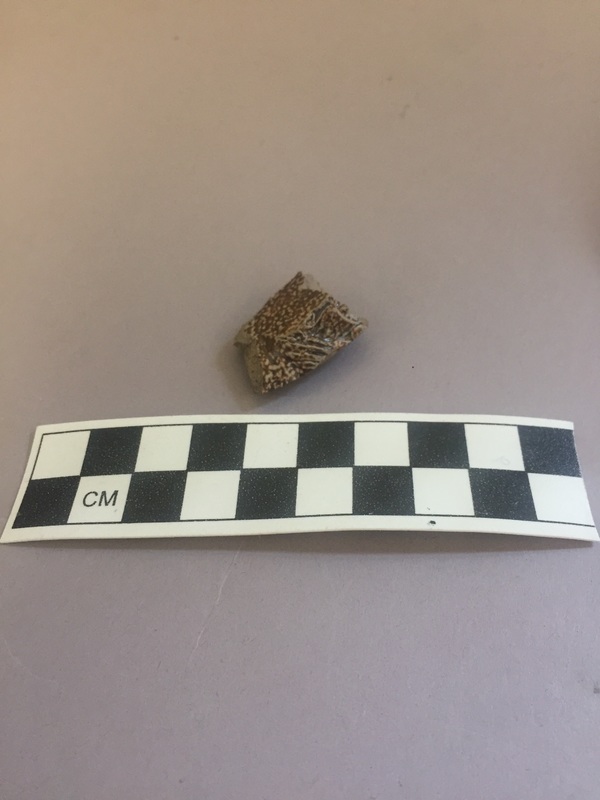
Background: The website, Diagnostic Artifacts of Maryland, allows us to conclude that the artifact that we excavated is a German brown salt glaze stoneware with iron oxide slip from the 17th century (Image 1). This is most likely from the neck of a…
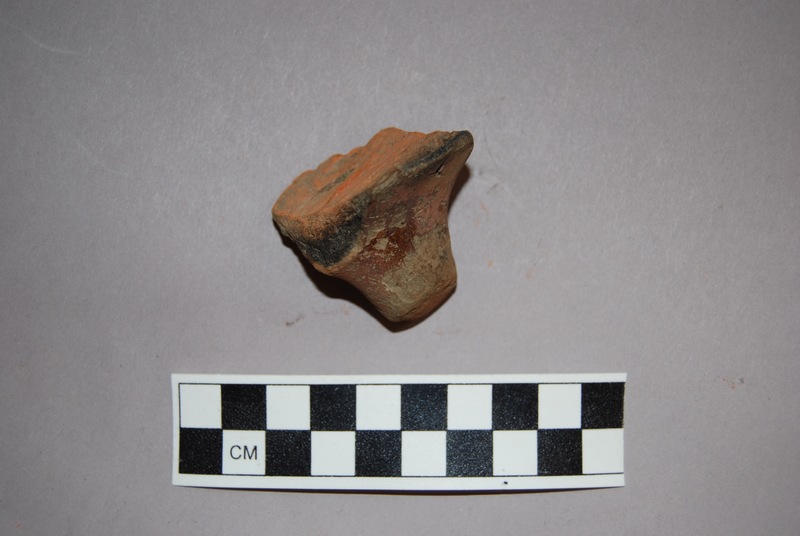


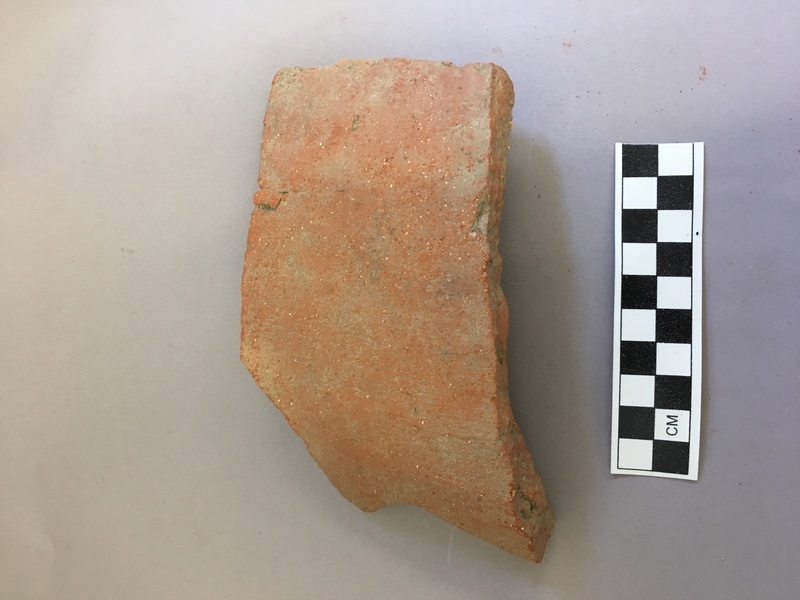


The eye stamped into this sherd makes it easily recognizable as a shard of Bellarmine, a name which alludes the Roberto Bellarmino (1542-1621), a Cardinal allegedly hated by protestant potters. Bellarmine-style stoneware has been dated as far back as…